Being A Hero is Holding You Back with Bill Flynn
Download MP3People First!
===
[00:00:00] Welcome to SkyeTeam's People First with Morag Barrett. Here, we'll be exploring the people side of successful businesses, careers, and lives. We all have a story to share, and there's something to be learned in every story. Join us to learn from authors, business leaders, thought leaders, and people just like you to uncover the latest ideas, resources, and tools to help you become more effective at work and life.
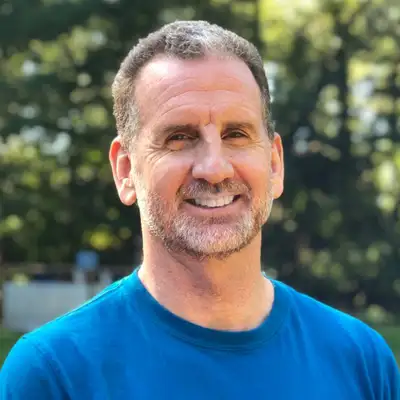
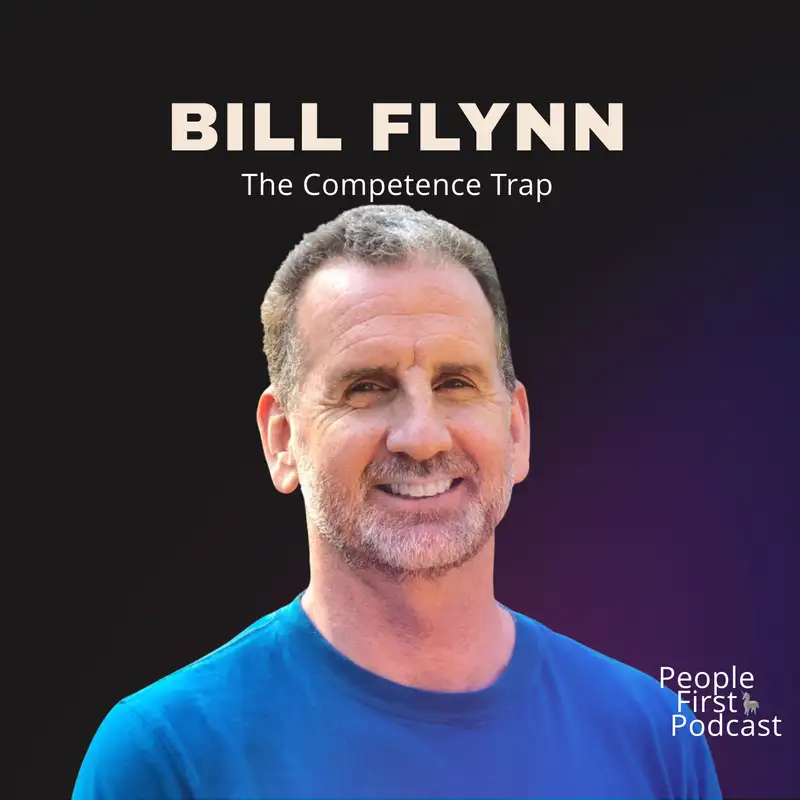
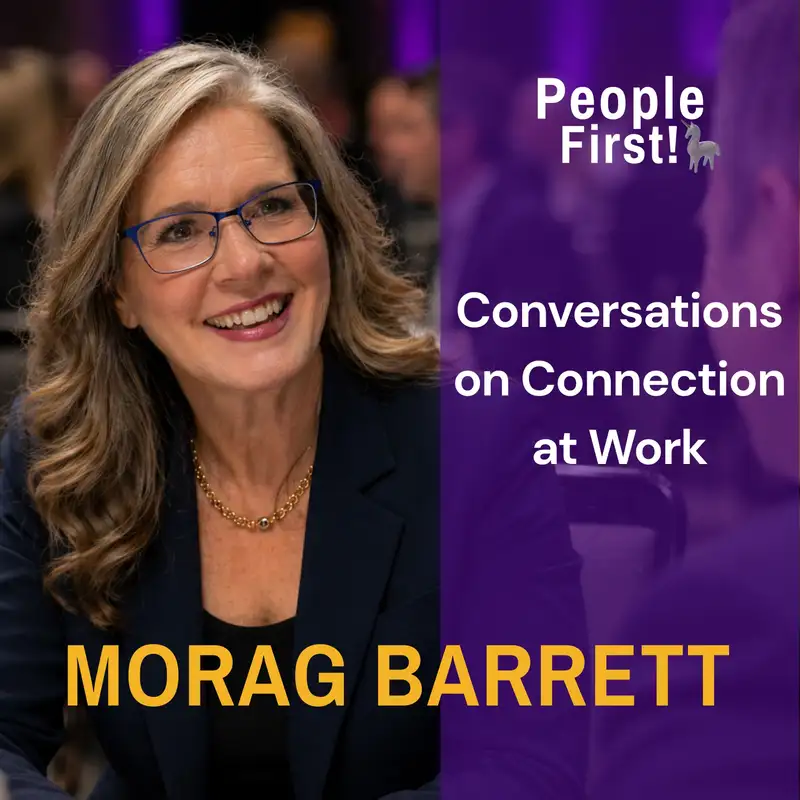
As it turns out, the secret to success is cultivating winning relationships. Business is personal and relationships matter. Welcome to this week's episode of People First, and my guest this week is my friend and colleague, Bill Flynn. Bill and I met as members of the Marshall Goldsmith 100 Coaches community and immediately hit it off.
Bill has had the opportunity to collaborate with Alan Mulally. He has pitched Steve Jobs, [00:01:00] accomplished much and failed often, and learned many useful lessons from more than 30 years of studying the science of success. He is best described as a pragmatic Simon Sinek, which means that this conversation is gonna be edgy.
Hold onto your seats. We are gonna challenge everything that you may have thought made for successful leadership or careers in the corporate world. And just as a little bit more background, as a little teaser for you, he has a bestselling book, Further, Faster, and we're also going to be talking about his new book that will be emerging in due course, Hero to Architect.
So Bill, I know that's just a wee glimpse of the magic that is you, but welcome to People First. Ah, wee glimpse. I love the Scottish. Very nice. Yes. Thank you very much for having me on. I'm so glad, so glad to be here. Yeah, it's gonna be [00:02:00] fun. Well, as you know, my whole passion is workplace relationships, creating cultures of connection, and bringing people together to make magic together.
Mm-hmm. So as you think about those 30 years, your experiences, the highs and lows, tell me what role have relationships played in your success? Yeah. So first, I will commend you. Um, as you know, and now your listeners will know, I am a management science geek. I've been studying it for 30 years, and having a best friend at work is one of the top reasons why people feel fulfilled.
There is a lot of research that supports that, so I- I'm so glad that you focus on, on that. Y- you know, for, for me, there were a few relationships that I think made a big difference for me in my life. Um, two that I think made the biggest difference early on, you know, is when I was a [00:03:00] 20-something-year-old kid and trying to figure stuff out.
Uh, I got hired by this, uh, gentleman, his name is Blair Heavey, and he, he was so wonderful to me. He, um, gave me lots of opportunity probably before I was ready for it, uh, which made me stretch. Um, very loyal. We did four companies together. Um, we had two IPOs and f- I think four acquisitions together. So we did a lot of stuff over 15 or 20 years.
So he really made a big difference. And then, as you mentioned, um, A- Alan Mulally, I, I wouldn't be sitting here talking to you if it weren't for Alan Mulally. Uh, he is the reason I'm, I am in Hunter Coaches. Um, I can't remember if I told this story, but he reached out to me five or six years ago and, and said, "Hey, I read this article you wrote about this book, about my work at, um, Ford called American Icon," and he said, "You nailed it, and I want to meet you."
And I said, "Are you Alan Mulally? You're really Alan Mulally? You're, you're [00:04:00] writing to me on my website?" Yeah. Wow. And that's why I'm here, and he's, he, he, he invited me in and, and I don't think I would, I, I don't think I would have this book, uh, there ... I, I thank him. On Thanksgiving, I sent him a note saying, "You are one of the people I want to thank.
I d- I don't think I would be doing what I'm doing now or, or feeling like an, I can have as much impact." Whether I do or not, I don't know, but I've, at least I feel like I have a chance of having an impact because of, of that kindness of him just reaching out and saying, "I want to meet you." I get goosebumps as you share that story because it goes back to the heart of my first book, Cultivate.
We've all heard of six degrees of separation or six degrees of Kevin Bacon. The reality is it's two degrees of connection, and it's one conversation that can make all the difference. And so when we're putting out the articles, when we're sharing our opinions, whether it's on LinkedIn, social media, or in the office, you don't know who's listening and watching [00:05:00] and reading until that loop closes.
And to your point, it can change the whole trajectory of everything that we're doing together. Yeah. It's powerful. I agree. All right. So in the green room, we were having some fun. A juicy start to the conversation here today because we were both lamenting that the model for leadership and organizational culture, it's broken.
Something isn't working because the numbers that we've been tracking for decades are not shifting in the right direction. If anything, they're going downhill. So why don't we pick up there as to what we see, what you see in your science geekiness of leadership and organizational success, because then that's the inspiration, as far as I can see, for your fabulous new book.
So. Exactly. And oh, by the way, and we named it, uh, uh, the, the, the world named my book. [00:06:00] It is not, no longer called Hero to Architect. It's now called The Hero Trap. Ooh. Uh, the leader's shift from doing to designing. So that's what we, we narrowed it down. We had, like, 100 or so people who voted on it, and, and that came out.
Um, so one, I don't know that, I don't know that it's broken, but it's not fully formed, in my opinion. Uh, I think the things that we do in leadership are, are important and, and they're necessary. Um, but as I said before, th- they're valid but not sufficient, in my opinion. Uh, so if you look at the numbers, and there's numbers out there from the Bureau of Labor Statistics, from Small Business Administration, if you look at businesses over about a 25-year period, half of them go out of business in five years.
And then if you continue on to the 25th year, only 16% of them are left. Uh, my supposition is that you'd think we'd get better as we did- Mm-hmm ... it more often, yet we, you know, it, it [00:07:00] shallows, but it still goes down. Um, and I, as I mentioned to you before, my overarching goal is to, what I call bend the curve, right?
I want that curve to, to be less steep and not go all the way to 16%, and I think it's totally doable. I don't know how much impact I'll have, but I, but I'd like to try it. Um, and as you and I said, you know, Gallup's been doing the engagement numbers for years, decades even. They haven't really moved.
They're stuck in this channel between 25 and 35%, and they just keep going up and down. That's not good. You know- Mm-hmm ... we, we, we spend most of our, our, our adult life at work. You know, stress kills. And so if you're not happy and you're stressed at work, then, you know, we're actually doing damage to, to human beings, which I think is sad, and, and I, and I don't want that to happen.
You know, since the CEO tenures are shrinking, you know, they're now, like, a few years, where they used to be a lot longer. [00:08:00] So I, I'm gonna say that they're, we aren't doing the, we're not, it isn't working, and we should- Mm-hmm ... we should try something else. And so my, um, my premise is that there are a number of things that we're doing wrong.
We're not doing them completely wrong, but we're doing them wrong enough that they add up. And then as you get bigger and the world becomes more complicated and complex, that's what slows you down. Um, we can't be the hero anymore, and unfortunately- We've been trained to be the hero, right? Um, you're a very bright woman.
I'm sure you got great grades in school. You were rewarded for having the answer, right? Not according to my teachers, but yes. You know, and you've been successful at what you've done. You, you've been, you've been the person, the go-to person. But when- Mm-hmm ... as you know, uh, because you've, you've been studying this for a while as well, when you get to a leadership position, all those things that have formed you actually now begin to work against you.
[00:09:00] Mm-hmm. Because you c- you can't have all the answers. There's no way you can have all the answers. If you try to be that person, you will slow everything down. You'll create learned helplessness, um, and you will be the bottleneck, right? You know, there's a reason the bottleneck's at the top of the bottle.
Um, so I'm saying we need to do something different. You know, you, you need to move from hero, or what I call controller, to builder, to architect. So controller is I, I solve. Builder is I teach you how I solve. And then architect is I, I and we design systems that make the solving, uh, make me unnecessary for the solving.
'Cause my job as a leader is to look out, not to look down, and we too, we too much, we spend too much time looking down in the business, running things and making decisions, you know, having the door open and all those things that we think are good, and I think it's now becoming a problem, or I'm seeing it as a problem.
Maybe it's been a problem a long time. I don't know. Well, it's certainly shining a [00:10:00] light on it, and I love the fact that the way that you have crafted The Hero Trap, the book, is in the s- the systems that attach, attack both the systemic issues, those broader how do we architect systems, processes, attitudes, mindsets, so the human element, but also with the organizational element, as well as just starting with me.
Where do I need to get out of my own way, let alone get out of the way of my team? And as I reflected on my own career, certainly my c- my catalyst for change was early, I valued independence. You could delegate a piece of work to me. I'd go do it with a minimum of supervision and just get it done. But I've come to realize, hence my passion for workplace relationships, it's all about interdependence.
And when I became a bank manager, when I became a leader, my desire for independence actually [00:11:00] created isolation and disconnection that was unhealthy, um, individually, but also undermined our ability to be better together. Y- you probably know this, but maybe some don't, is this idea of consciousness and being is, is reliant on others.
We are who we are because of other people, not just because of ourselves. So making sure that you have those great relationships act- actually is, is a confirming and affirming sense of self. If you don't have that, if you're, if you're just isolated, you are, you're not fully yourself. Um, we are who we are because of other people.
You know, there's this thing called ubuntu, which is, you know, an, an African thing where, you know, you know, we are part... We are, we are better because we are, because I have a relationship with you. Um, so I, I, I definitely love that. So what you're talking about there is that disconnect between intent, "I kn- I think I know who I am and what I'm trying to [00:12:00] achieve," but the impact, 'cause you may have either a similar or a 180 experience, but if we don't actually articulate that, neither of us can choose to flex or adjust to close that gap.
And certainly in the work and the leaders I'm coaching, that gap just becomes either I'm blinkered and I don't realize I am that bottleneck that you mentioned earlier on, or the how I'm setting goals or delegating work is causing friction elsewhere. It's one conversation at a time. Yeah. So you talked about controller, builder, architect.
Mm-hmm. H- how do I know which of those, I'm gonna go with hats, which of those hats I'm wearing, or is it more like a mosaic, that I enter this journey with a little bit of each? Yeah, so I, um, I call it identities. Uh, but hats, hats is good, too. Uh, and to me, it's a repertoire [00:13:00] not a destination. Mm. Yeah. So sometimes you need to be a controller.
Sometimes you have unique experience or knowledge, or there's a crisis and, you know, you gotta fix the thing. And yes, you jump in and you do, and that's perfectly fine. Uh, and, and by the way, again, that's what got you here. Um, so what I'm s- what I'm proposing, my thesis, is that we default, especially under pressure, to a certain personality.
Often, it is controller, right? 'Cause when financial pressure hits or other pressure hits, you know, we just... Because we have been so successful and we've been rewarded for fixing and, and, and insight and wisdom, that that feels most comfortable. And by the way, very often what's sort of, um, insidious about it is that even if you want to change, the people around you actually expect you to be that person, and they want you to be that person because it's comforting.
It's like, you know- [00:14:00] Mm-hmm ... "Morag will fix it." You know, it's like, "Ah," it's like, "I can relax," right? Um, so not only are you, are you being rewarded all, all, all through your life and it feels good, you're also being reinforced by those around you when you're, when you're that person. Um, but what I'm saying is you have the choice, and your job is to first figure out context.
Which, what should I be here? So for instance, let's say there is a crisis. You jump in. If you jump in, fix it, and then leave, you're not done. What you need to then say is, "Okay, folks, here's how I did that." Mm-hmm ... teach them how you think, and that's sort of the builder, right? And, and that gets them at least so next time when that particular thing happens, maybe they don't need you.
They can do some- they can fix it themselves. The problem with just being a builder is there's nuance in almost everything. So it'll be the same context, but it will be a, there'll be a tweak or two in it, and then they're like, "Oh, well I don't recognize this. Morag didn't teach me [00:15:00] this, so I need to go back to her and have her do that."
When you build a system and you're an architect, they can use their own judgment and they can say, "Oh, this looks like that thing that Morag taught me. It's not quite the same, but I've got this commander's intent or heuristic that I can leverage, and I will fi- try to figure it out for myself. And either I'm just gonna fix it and tell you what I did, or I'm just, I'm gonna come to you and say," as opposed to saying, "Morag, can you, can you help me fix this, or can you fix this for me?"
They'll come to you and say, "This is what I intend to do." And even though it's a little, this is sort of the David Marquet Turn the Ship Around thing, for those of you who know that book. Mm-hmm. Oh, I like that book, yeah. But it's a totally different way of thinking. There's agency in that, right? Even though you may say, 'Yeah, go ahead," it's very different than, you know, s- let's sit down and figure this out together and then, and then, you know, either I fix it or we fix it together.
It, it gives them agency, it gives them confidence. That's a totally different thing. So what I wanted to say is, look, know who you are, know where you default to, know what happens [00:16:00] under pressure, and decide which one of these things should I be right now? But always moving towards architect. You're always wanna be trying to moving towards building systems that solve problems without your presence necessary.
So I, I love the way that this grows, and I love the fact that you're thinking about this is situational. M- making an explicit choice as to what do I need to do right now, ideally cultivating your architecture mindset and skillset, but knowing when to turn the dial up and when to turn the dial down. So going, the transition from controller to builder, how, how do you des- The chapter title really resonated for me, From Control to Connection: Designing for Ownership.
So what are those first steps in either learning to let go, but also empowering that confidence and mindset in the team who may need to [00:17:00] step up and take ownership where they haven't had to in the past? Yeah. Well, first, you know, as, as, as they say, i- if, if you wanna solve any addiction, you have to sur- fir- first be aware of it.
Um, and this basically is an addiction, right? This is a dopamine addiction, right? It feels good. Um, uh, I call it, I, sometimes I call these things mink holes. You, you, have you ever heard the term mink hole? No. Mink hole is a rat hole- You're gonna have to... Sorry, segue, you have to define that for me now ... Yeah.
Mink hole is a rat hole- Okay ... that feels really good Or if you're a mink, maybe. Yeah, if you're inside- Okay ... if you're inside, it's mink, right? It's, it's soft- Mm-hmm ... it's furry, it's warm, it feels good, but it's still a rat hole. Mm-hmm. Okay. Um, but it's, it's deceptive. So, um, I do, I do have an assessment and, and what I do is, is relatively well-known, is that there are three versions of you, right?
There is who you think you are, how others perceive you, and how you actually are- [00:18:00] Okay ... which is your behavior, right? So the assessment goes through that and, and it says, "Hey, why don't you grade yourself on these things? When this thing happens, how do you behave?" And we're the heroes of our own story, so, you know, we're not gonna quite get it fully right.
And I also say, "Well, then why don't you go ask your teammates, send out this, you know, five-question thing and have them react to how they think you are in these situations. And then what I want you to do, I want you to do two things. I want you to go look at your calendar for a week or a month, and then tell me what you're doing."
Right? Are you in a lot of meetings where you're making decisions? Mm. Mm-hmm. Right? Um, are you spending a, a lot of time controlling or being the hero, or are you, are you spending time architecting, building systems, or, or, or, or building, you know, showing people how you do stuff? That's really how you behave.
And then the real test is, you can do this in a little way or a big way, I call it the vacation test. Go away for a week or a couple of weeks, don't check in, and then see [00:19:00] what happens when you come back. What has broken- I can... Yeah, I can imagine there are leaders everywhere hyperventilating- ... and getting the vapors at the idea of not checking in.
But to your point, that is a true litmus test. Yeah. Because to be honest, if you are a leader that can't even get on a flight from one point to another and be offline for a few hours, then I'm telling you right now, you're failing as a leader. Right. Your team needs to be able to step up and manage in your absence.
So if you can't do two weeks, try two hours. Yeah. Or as, and, and what I say in the book is, is just pick one thing, one thing that if it fails, no big deal. But just- Mm-hmm ... see it. And it might be you're in a meeting and you would normally step in here, and you don't, right? You just see what happens. You are purposely quiet or maybe you ask some clarifying questions.
You're, you're not directive or, or advisory. You are curious. See what happens. Uh, [00:20:00] that's a smaller, more safe way of, of stepping in. You- that's sort of dipping your toe in versus diving in on the vacation. And may I build on that? Sure. For the leaders I coach, I would suggest as well, call an audible, make the implicit explicit.
So perhaps say to the team, "Hey, normally I would dive in here, but I'd love to see what you would come up with. I'm just gonna sit back." Or, "Bring the team together, we're here to decide X, I want you all to present your recommendations, and then I will at the end." Because otherwise, if you suddenly go quiet, they're all sitting there going, "Oh, no.
Oh, no" Yes ... and they're gonna assume the worst. So call the audible. Agreed. Agreed. All right. So I, I love- Yeah, I, I love that. I- I'll say one thing ... yeah ... do it live- Yeah ... and then see what their reaction is as soon as you say it. If you see people sit back in their chairs, if their eyes widen, then that's already a sign that y- they're- that you're, you're doing too much.
You're, as [00:21:00] Marshall likes to say, "You're helping-" Mm-hmm ..."much too much." Yeah. But I, I love your advice on the calendar. It reminds me of a conversation with a previous guest, our mutual friend, Michelle Johnston, and her new book, The Seismic Shift in You. And in there she talks about our calendars, and the fact that often we'll have our home calendar, family calendar, the work calendar, the personal calendar, and as she points out, there is only one of us.
But also, what goes on it is what we value. So if we say we want to design for ownership, we want to empower the team, does the work we're actually doing reflect that? Or is it reflecting the what got us here version of us, the command and control that we may have been doing? I agree. Yeah, behavior, behavior is who you are.
So as you move beyond that and, and you start to design for ownership, as you wrote the book, [00:22:00] and with taking your experiences and your research and, and the work you've done with leaders and putting it on the page, what was most surprising to you as you got to what I call the messy middle?
Um, that's a good question. I don't know that I really thought about that. Um, so I've been so engrossed in not only this book, but I, I think I told you, so I've written seven books in the last six months. So this is- This is the first, and they're all connected. Mm-hmm. Uh, uh, and what's really kind of fun, and I'm sorry, I'm gonna go a little on an aside, what's really been kind of fun is, is because I've written them all basically together, and they're all connected to each other.
So, so what I basically said is, I wrote a book about decision-making first, which started this thing off, and then as I'm writing I'm like, "Well, well let-" This needs to be explored further. Yeah. And then, so then I ke- sort of backed into where I am, which was I said, "Okay, this... How do I bend the [00:23:00] curve?" You know, I, I, I've studied scaling up and EOS and Value Builder and all these sort of methods and such, and they're great.
But I don't think they're quite there yet, and so this is my version of that, right? I call it the Performance Operating Series. And so I said, "Well, then what kind of leader do you need to be to optimize this, this system that I've created?" Mm. And that's how I wrote this book, which was the second to last book that I wrote, um, 'cause I said, "Well, these are great, but, you know, I should probably talk about who you should be."
And, and I had a very clear vision of who that person is. And this... I, I've always said you need to fire yourself from the day-to-day because your job isn't to run the business anymore. Your job is to create the future of the business and allow people to run the business on your behalf. You have to have the courage to give it away.
How would you, how would you feel comfortable giving away your business to others? And that's where I sort of came up with this architect, um, archetype, if you will. And [00:24:00] that was surprising. This sort of... I didn't expect to have controller, builder, architect. I didn't expect to have this sort of very framework-y looking thing.
Um, and that was a nice pleasant surprise, um, because I like simple things. I like threes. I like very simple things. I'm a minimalist. Um, that was a wonderful surprise to have it come out of that. And then i- in general, uh, so I wrote the Further, Faster six years ago. I vowed I would never write a book again because I didn't really write Further, Faster.
Susan did. She's a writer. She's much better at writing than I am. You know, I spoke to her and, and, and inter- You know, she interviewed me, and I sort of pushed everything out in, in voice. And she took that and, like a good writer does, turned it into something someone would wanna read. Which I am, I am a reader, and I recognize good writing, and I know that I'm not one of them.[00:25:00]
Uh, or I have to work really, really hard to get to a point where I'm like, "Okay, that's at least acceptable." Uh, and I knew that if I did it myself, it would take me 10 years to write a book 'cause I write an article that I go four or five, six times. I'm like, "This would take forever to write 40,000, 50,000 words."
Um, but I've had all these thoughts and ideas and, and, and now with, with AI and such, it's a lot easier to, to get it out there and, and work with it. Um, especially since I have all this content. I've written 200 articles. I've got the book. I can say, "This is who I am. This is how I write. This is how I think.
Help me to form this thing." And it's so much easier than if I did it my- just by myself. So what's shifted for you in that continuum of controller, builder, architect in terms of your own persona? Yeah. [00:26:00] So, um, I've always sort of leaned towards builder and architect anyway. As, as I sort of reflected on my life, um, you know, I was probably more controller.
So I used to run a Papa Gino's, um, when I was in college, and Papa Gino's is a local restaurant, you know, a chain here- Mm-hmm ... in the New England area. I don't... It's still around, but it's, it's much smaller than it was. And I was, you know, I was 17, 18, 19 years old and, you know, I was telling people what to do, and I, I had firm control and, you know, I was standing there.
I was literally standing behind everyone and, you know, "Go to the salad bar," and, "Fix that," and, "You do this over here." And, you know, um, so I definitely had that, um, mode. But as I learned more about management science and I learned about psychology, et cetera, I was like, you know, well, that... It never, I didn't really enjoy that.
I didn't f- it, it was w- I modeled other people, but I was never comfortable [00:27:00] with that. I'm not a big fan of telling people what to do. Um, so I began to morph towards, you know, I'm going to, without trying to be condescending and pedantic, you know, sort of teach. And I think that's sort of how I got into coaching, is because to, to me, coaching, at least the way I come at it, is really much more teaching than it is anything else.
You know, I'm, I'm standing up there and I'm asking questions, and I'm, I'm helping people come to their own versions of answers in, in themselves, and throwing in, "Hey, I've, I've learned a whole bunch of stuff over the last 30 years. Let me at least share with what, what I, what I know, and then you can decide if and how it works for you."
Um, so I've sort of had that sort of teacher bent anyway, which I think is more of a builder, cultivator kind of thing. So that's sort of what I've... It's what I've... It's funny, over the last few weeks, that's what I've been thinking about, is, uh, that sort of, sort of who I am and how did I get here. So yeah, that's sort of my journey, I think.
So The [00:28:00] Hero Trap will be out. Mm. That's going to be our tease. Though it includes frameworks, templates, diagnostics, the assessments, how long do we then have to hold our breath and be on tenterhooks for the other six to then continue- I don't know ... that journey with you? I don't know. I'm, I'm gonna be like 80 when they're, when they're all out, I think.
Uh, I don't know. So this is new to me, Morag. Uh, I mean, you have two or three books and, and, and you know more about this than I do. Uh, it takes... If you go through a publisher, it takes a while, 'cause they do things on their own time. Yeah. Um, and I was told that if I didn't have this thing in by a certain date, it would be a year before they would be willing to put it out- You know, then.
And, and luckily I had it pretty much done, so I, I think I'm gonna be okay. And then, and then now you're, like, promoting that, and you're doing all that work for that, and they're not even thinking about the next book. So, so [00:29:00] technically I should be now doing the next book, right? Mm-hmm. Getting that ready for October of '27 if I'm going through a publisher.
So maybe I go back to your friends at, at, uh, you know, Take Two or whatever they're called and- Page Two. Yeah ... Page Two and, a- a- et cetera, 'cause then I, then I can do it more on my terms. But, you know, I'm, I'm a nobody, so I, I wanted the publisher, you know, I guess its re- quote, in quotes, credibility, 'cause p- self-publishing this, I don't think people would take me as seriously.
'Cause, you know, as you know- Say that ... the idea can be great, but if nobody hears it, you know, and, and it doesn't have an opportunity to be, to be seen or heard... And we are humans. We- Yeah ... we like social proof in order for something, you know, to, to hap- to, to work. So I'm a realist, so I, I, I at least wanted to try a publisher this time and see how it [00:30:00] goes, see if it's helpful.
You know, I've learned- And then see what happens with the other six ... I've learned a lot that I'm not gonna really get a lot of help from them. So for everybody listening, I do want to clarify one very important part. You may have heard Bill say, "I'm a nobody," and I just want you to know that Bill is a somebody.
He is somebody that I seek out when we are at 100 Coaches community events. He is somebody that when I see his comments, his articles appear in my social media feeds, i.e. LinkedIn and WhatsApp, et cetera, I read them. So Bill, you are a somebody, and I agree, the message that you're bringing in The Hero Trap and the six books that follow, talk about overachiever, I love it, um, are gonna make a difference.
And you can count me in as part of that launch, uh, group to help spread the word beyond your immediate network. Thanks, Joanne. I'm gonna need you. So as we come to the end of our time [00:31:00] together today, what's one thing that you hope listeners and, um, viewers of the video version are taking away from this conversation?
So I know it's gonna be really trite, but there is a better way. You know, it's a shame... M- my premise has always been it's a shame that really great ideas, really great people, and really great businesses fail or struggle for completely preventable reasons. We know how to do this, yet we don't do it, and- You know, I'm, I'm currently a small voice, hopefully a, a growing voice, you know, saying that there's a better way, you know.
People like Alan Mulally and Bob Chapman and Reed Hastings and even those people who don't like him, Jeff Bezos, and they have, they have done things differently. And so far it really works. I mean, Andy Jassy took over from Bezos at Amazon and he runs the equivalent of five Fortune 500 companies [00:32:00] by himself.
Why? Because of what Jeff and that team built over 25 years, which is a systems architect approach. Mm-hmm. So there is a better way. That's why I like to say there is a better way. Let's seek it out. Let's try to figure out, 'cause we are, we want, I want to make the world a better place. And if we can make the workplace a better place, that is a huge chunk of almost everybody's life.
You know, whether it's because you have a great relationship or you feel agency or you feel heard, whatever that is, then that's worth it in my opinion. Bill, we are definitely better together. How can people learn more about you, your work, and obviously get on the advance order list for The Hero Trap?
Sure. Uh, yeah, there's a couple assessments you can download if you want, uh, on my website. Everything is on catalystgrowthadvisors.com. Contact info, my, actually my book Further, Faster is on there for free if you want to download it as a PDF or you can order it from Amazon or Audible. Um, every- everything is at, at that website, [00:33:00] catalystgrowthadvisors.com.
Okay. I'll make sure that that information is in the show notes. Thank you for joining me here on People First, and I look forward to celebrating The Hero Trap and the launch dates for the other books later in the year. Thanks, Morag. Thank you so much for joining Morag today. If you enjoyed the show, please like and subscribe so you don't miss a thing.
If you learned something worth sharing, share it. Cultivate your relationships today when you don't need anything before you need something. Be sure to follow SkyeTeam and Morag on LinkedIn, Facebook, Twitter, and Instagram. And if you have any ideas about topics we should tackle, interviews we should do, or if you yourself would like to be on the show, drop us a line at info@skyeteam.com.
That's S-K-Y-E team.com. Thanks again for joining us today and remember, business is personal and relationships matter. We are your [00:34:00] allies.
Creators and Guests